
The Solar System of Grief: A New Way to Understand Loss, Connection, and Emotional Gravity

In the matter of eight days, I attended three funerals. They ranged from a co-worker's father, to the grandmother of one of my partner's best friends, to the father of my best friend in high school.
I discussed this with my therapist, Suzy. She asked me how I felt after attending them all. I told her after the first two, I was starting to think I was becoming numb to death.
I told her on my last visit to the funeral home, the employee greeting arrivals in the parking lot recognized me. As I rolled down my window, he looked at me and asked:
"Will you be going to the church? Wait a minute – weren't you just here a couple of days ago?"
Yes, I was.
I know this is going to sound ridiculous and insensitive, but I told my therapist that, in hindsight, I wish my high school best friend Dennis' dad's funeral wasn't the last one in the sequence.
How dare Dennis's father not time his death to accommodate my mental well-being?
I used to go over Dennis's home pretty much every day when I was in high school. I even went on a few of their family vacations to their summer place they had up in New Hampshire. His parents were like second parents to me back then, or as I told Dennis at the funeral, they were my "American" parents.
My parents are Portuguese and speak very little, if any, English. Growing up, I only hung out with my Portuguese cousins or friends. Going over Dennis's house was my first introduction to the American family dynamic of fully embracing holidays, participating in school events, and having modern technology.
I hadn't seen Dennis in over 30 years. I had a feeling I was going to run into some other high school friends, as well. I did run into two other friends who I was very close to in high school. Being reunited briefly after thirty years of not seeing each other, I expected more chest bumping. I know, I know, we were at a funeral, but still.
I told Suzy I wish Dennis's father's funeral had come first because that one affected me the most. I thought I was good after the first two funerals. But seeing my old high school buddies – who were all very successful – propelled me down memory lane. I spent the next few days asking myself where did it all go wrong.
Like any good therapist, Suzy began repeating my words back to me as questions.
"Why did you say these deaths are getting easier to deal with?"
"Why do you say you are becoming numb to celebrity deaths?" (Actress Diane Keaton also died in the midst of all this).
"Why were you so affected by Dennis's father's funeral?"
"Why did you wish that one was the first funeral?"
The more questions she asked about how certain deaths affected me in different ways, I began picturing orbits in my mind. Some deaths hit closer to home. There were several factors why.
How often did I see the deceased person? How big of an impact did they have on my life? When is the last time I saw them? How did they die? Was it unexpected?
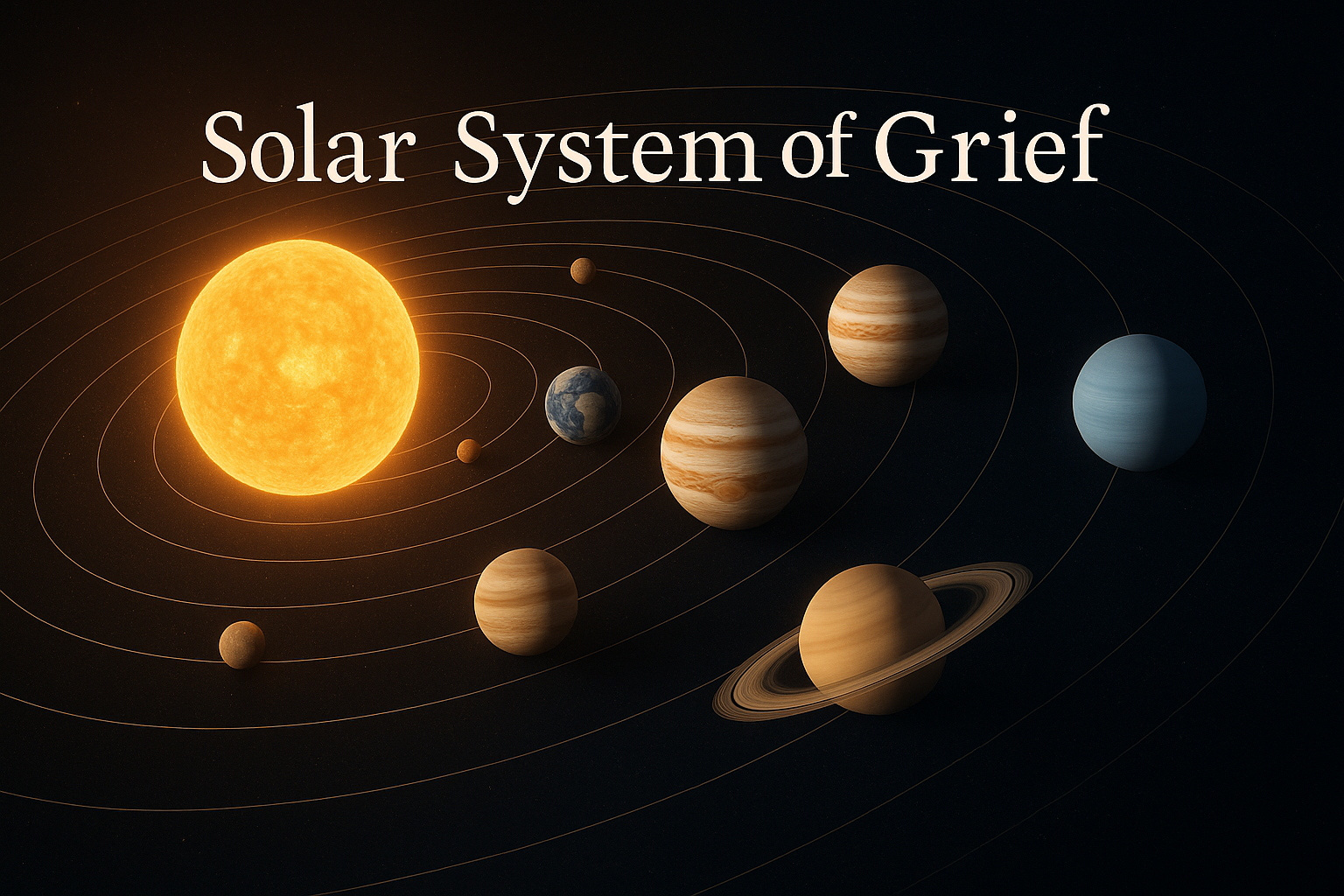
The more I talked, the more I began picturing a solar system with me at the center of it. I am the sun. I am the one from which everything originates.
I, suddenly, had an "Aha!" moment. I blurted out to Suzy:
"Eureka! I think I am picturing something. The name has come to me first – 'The Solar System of Grief.' I'll fill in the blanks after. But that is the name of my concept! This is going to change the world!"
Suzy, God bless her, nodded her head in approval. "That is brilliant, Tony. I love it!"
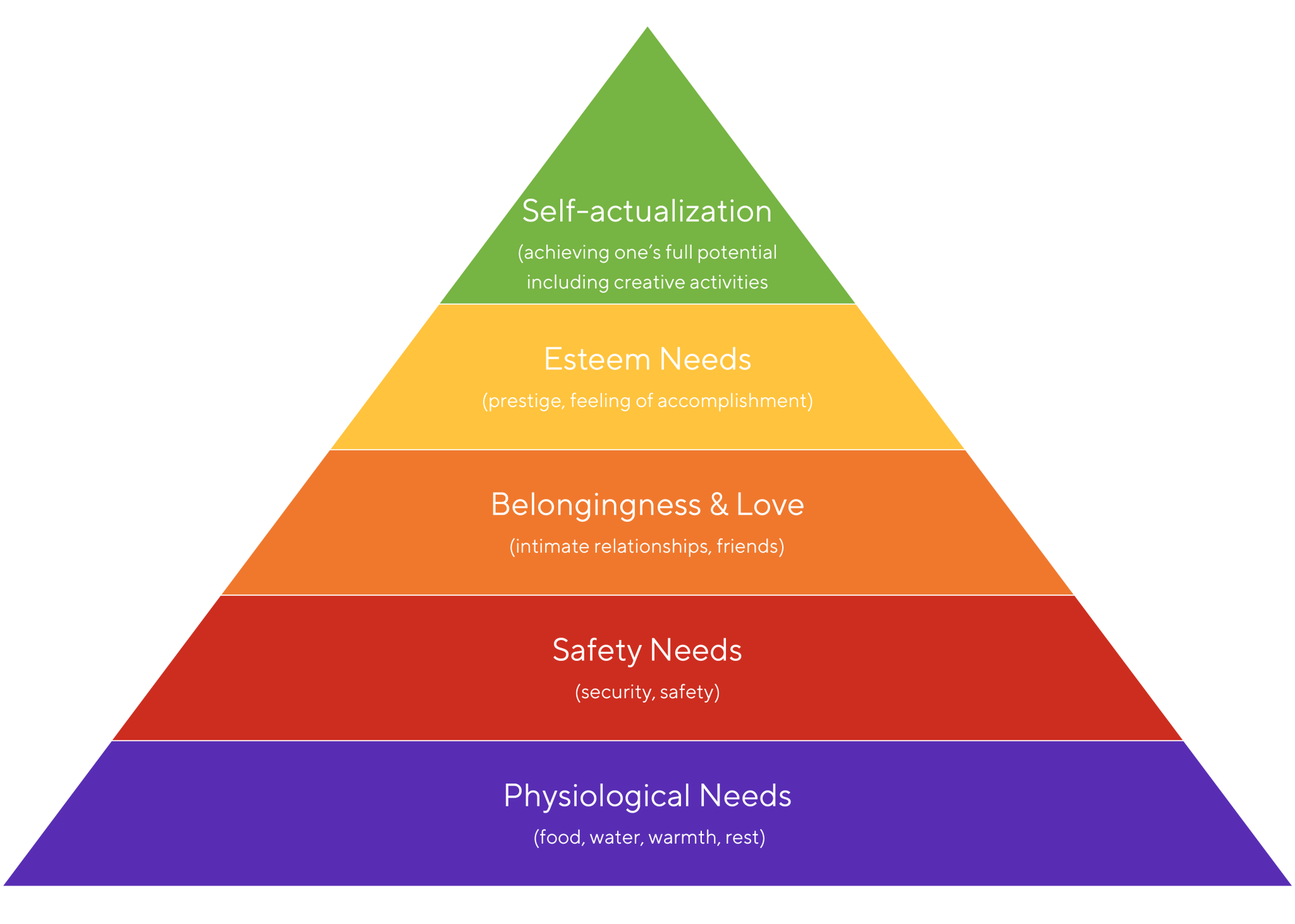
"Once I refine it and publish it in all the psychiatric journals and it gets printed in textbooks, do you think it will become as well-known as Maslow's Hierarchy of Needs?"
"Maybe, Tony. Just give me some partial credit for it."
This is your partial credit, Suzy.
As soon as I got out to my car after the session, I got out my notebook I use for journaling ideas and I got to work. I sat in the parking lot for a good two hours.
I began realizing creating a revolutionary theory is a lot of work. But I came up with a framework. Keep in mind this is a work in progress.
The Solar System of Grief: Origins
I am the sun — that much I’ve already established.
My life is a constant battle trying to hold everything together – to keep the planets in orbit, to balance everyone’s gravitational pull. Without that balance, things fall into chaos.
Keep in mind that the sun is always expanding. That’s one of the few facts I remember from college astronomy — and it freaked me out at the time. Stars grow and grow until, eventually, they explode. One day, billions of years from now, our sun will swallow the Earth and everything around it.
Yes, I have anxiety about things that will happen billions of years from now. I have issues.
In my Solar System of Grief, it’s the same concept. The losses we suffer in life keep accumulating — parents, friends, mentors, even celebrities who made us who we are. If we don’t find ways to process that grief, to keep it in check, it can begin to expand until one day, it threatens to swallow us whole.
Mercury
Who is in this orbit: Immediate family – parents, siblings, children.
These are the people closest to you. Their losses in you life will affect you the most. Mercury is the smallest planet and it is the closest to the sun. That is appropriate because only a small amount of people inhabit this planet. Only a small amount of people are deserving of the extreme warmth of our existence.
In my universe, only my mother, my brother, and my life partner, Erin, inhabit this small planet. They are the ones closest to me and who have impacted my life the most. I keep them near and dear to my heart. Their loss would, and has, shatter me.
Venus
Who is in this orbit: Close extended family, best friends
Not everyone who is immediate family belongs on Mercury. Some of you may have been orphaned. Some of you may have had a father, or mother, who deserted you at a young age and never wanted anything to do with your life (unless you became successful, of course). Some of you, sadly, may have been abused by a parent.
There are many factors why a parent or a sibling may belong on Venus. Who knows – you may believe they belong all the way out on Pluto.
Then there are some best friends who you may consider as family, and their loss would deeply impact you. The age they died or the manner they died may factor into how impactful the grief of their loss may be. If someone dies at a young age, tragically – in a car accident or, God forbid, a murder.
In my universe, my father resides on Venus. Why, you ask? I'm just being honest with myself. He is still alive, but I will, obviously, mourn his death – if I don't go first. But I would not grieve for him like I have for my mother. I have my reasons.
My cousins, Johnny and Suzy, reside here as well. They are the same age as me and we grew up together. To lose someone from my generation that I was that close to would deeply affect me.
Earth
Who is in this orbit: Other family (cousins, aunts, uncles), close friends, esteemed pets
These are the people who keep you grounded. These are the people who give us our identity. Much like Earth is the only planet known to man that is capable of sustaining life, the people on this planet constitute our lives. They define us.
We have built a history with them. They know us. People like these are a precious few. And they can never be replaced. When you lose a childhood friend, you can't go back in time and create another childhood friend. These longtime friends and relatives are the only ones you can share stories of childhood Christmases, weddings, or trips to the beach.
These are the people you can ask, "Remember in high school, we had that teacher who...?" Or maybe, "Remember when we were kids and we were riding our bikes down by the railroad tracks, and we found..."
Mars
Who is in this orbit: Supportive friends, esteemed co-workers
As we grow older, our circle of close friends gets smaller and smaller. That is reflective in the orbits of Mercury, Venus, and Earth.
The people on my version of Mars may not be as close to us as the people on those first three planets, but they are within reach, if you need them. It may take some work to reach them, but they are sources of support and "life" where sometimes you least expect it.
When my mother was in her final months, I received support from an unlikely group. My mother had eight siblings. Most of them moved to Canada so I have several cousins there. When I was younger, we used to visit each other at least twice a year. I haven't seen, or heard from, most of them in over twenty years.
When my mother passed, they all reached out to me. We've since established a group chat and we have been in contact ever since. They helped me through a tough time and I am grateful to have re-established those lines of communication. It helps keep my mother close to me.
I have also lost some co-workers in recent years. Some I worked with decades ago, and some I worked with very recently. These were people I spent ten, twenty, thirty hours per week with for years on end. I didn't spend my entire life with these people, but I did spend a sliver of time with them. Their loss affects me, deeply.
Jupiter
Who is in this orbit: Mentors (Teachers/Bosses), Neighbors, Pillars of the Community
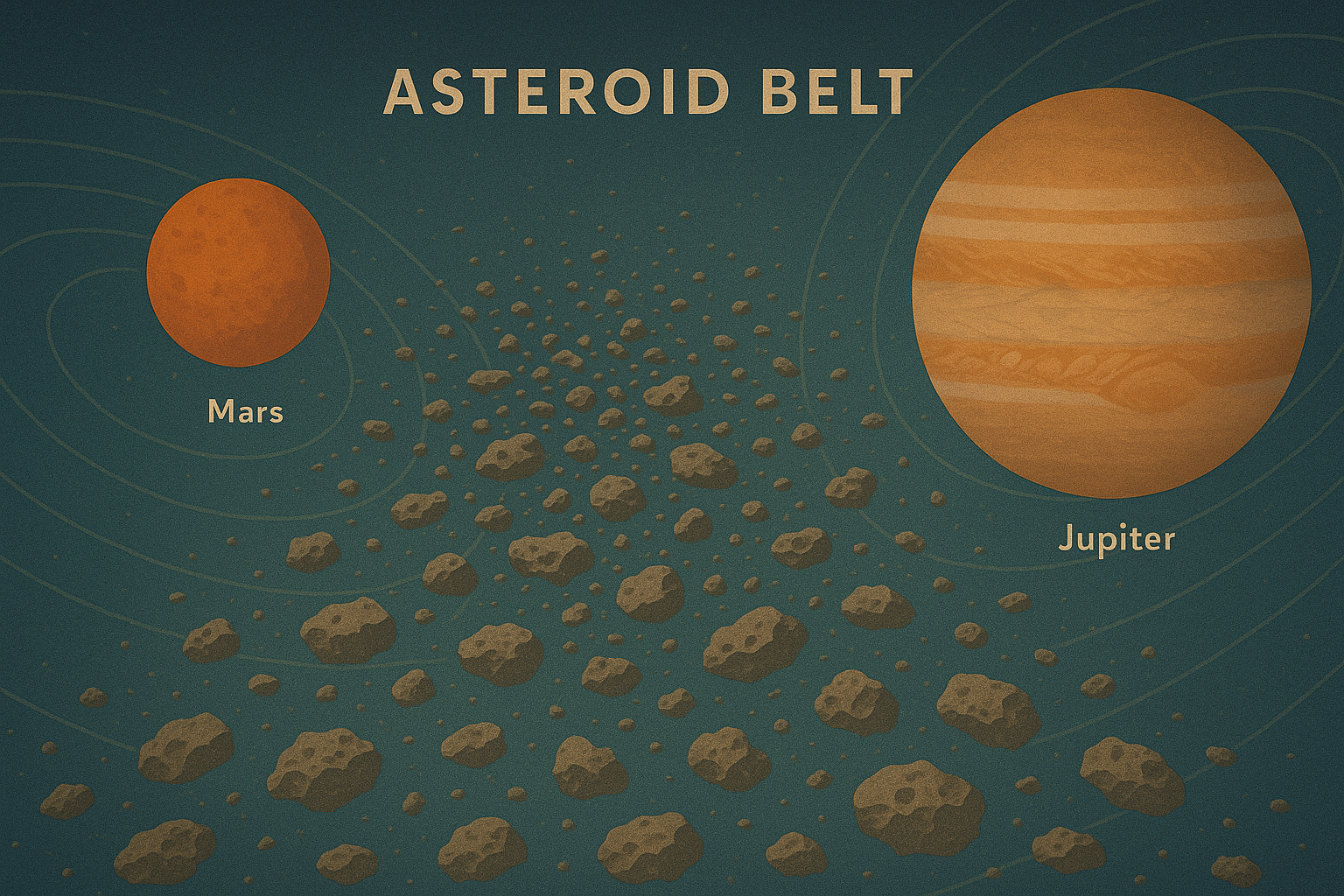
There is an asteroid belt that resides between Mars and Jupiter. It marks the boundary between the tiny planets that have rocky surfaces you can stand on, and the giant planets that are made entirely of gas which burn in the distance.
Sometimes you can see these planets with a telescope at night. They are part of our existence, if only tangentially.
Again, everyone's solar system is different. Maybe there are mentors that belong closer to our sun. But I would argue those mentors that do belong on Mars, or even on Earth, would transcend the "mentor" label and be viewed as "close friends."
We all have had bosses or teachers that we learned a lot from when we were younger. They had huge – like Jupiter and Saturn are our biggest planets – impacts on who we would become, but over the years we became distant from them and lost touch. We never forget about them, but they disappear into the darkness of our everyday lives. But we wouldn't be who we are without them. When you hear about their passing, you are like, "Oh, damn."
Saturn
Who resides in this orbit: Celebrity deaths
Saturn is the most beautiful, glamorous planet, but it is an illusion. The rings around it look solid, but the rings are made up of billions of pieces of rock and ice flying around together.
Celebrities form an illusion for us in our lives. For the most part, we never meet these stars, but certain ones become a vibrant part of who we are. We grow up with some of them. Sometimes their music gets us through difficult times. Sometimes we laugh hysterically at their jokes. Sometimes we have their posters on our walls growing up.
When I was growing up, Cheers was one of my favorite TV shows. It was set in a bar in Boston. Part of the lyrics to its theme song were, "Sometimes you wanna go/Where everybody knows your name." So true.
Cheers aired for 11 years. There were a total of 275 episodes – and I watched them all! Most of them I've probably watched at least five times.
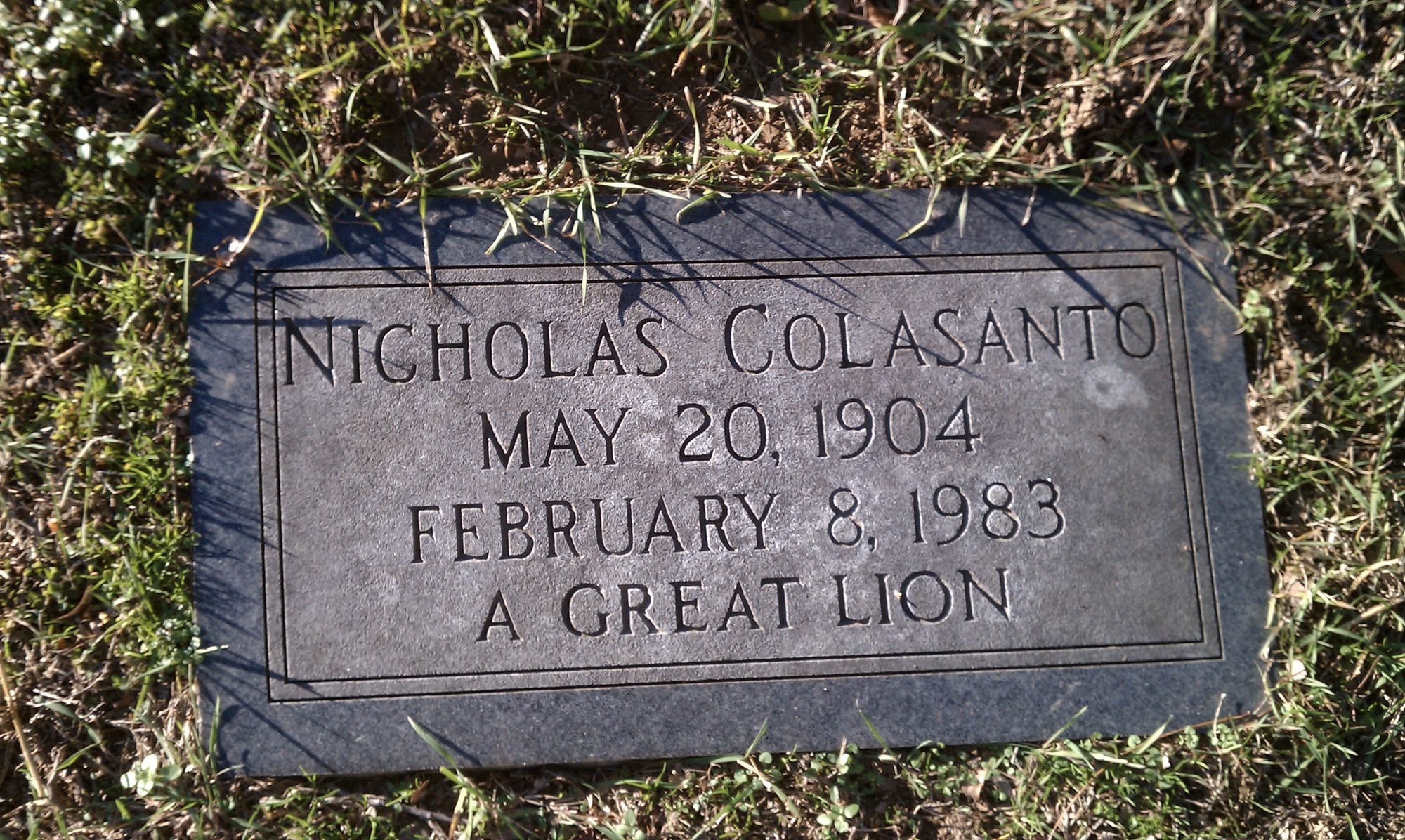
Nicholas Colasanto, who played "Coach" Ernie Pantusso on the first three seasons of the show, is actually buried in a cemetery just a few minutes from where I live. He is buried in a small, unassuming plot in Saint Ann's Cemetery in Cranston, Rhode Island. It happens to be the same cemetery Erin's grandmother is buried. I found his grave a couple of months ago for the first time.
George Wendt, who played "Norm," died just a few months ago on May 20, 2025. On the show, every time he'd walk into the bar, everyone in the bar would shout, "Norm!" He'd always have a great one-liner whenever Sam Malone, the bartender played by Ted Danson, would greet him.
As an example, Sam would ask Norm, "Hey, Norm, how's the world been treating you?"
Norm would reply, "Like a baby treats a diaper."
I can't resist one more. A different bartender, played by Woody Harrelson, would greet Norm, "Hey, Norm, there's a cold one waiting for you."
Norm replies, "I know. If she calls, I'm not here."
It was a sad day when I found out George Wendt died.
Other celebrity deaths that had a huge impact on my life were Princess Diana, John F. Kennedy Jr., Michael Jackson, Prince, Whitney Houston, Chris Farley, Steve Irwin, and Robin Williams.
Uranus
Who resides here: News stories, images of death on the internet
I know you are laughing every time you say the name, Uranus. Couldn't they have come up with a better name for a planet? Who thought that was a good idea? Was Urovaries taken?
Anyways, the people I would put on ... Uranus... are news stories. Maybe it is fitting. It is amazing how many times we are, involuntarily, exposed to news stories about death. It could be mass shootings, murder, or accidents. Maybe even celebrity deaths.
There is no avoiding it. If you watch TV, are on a computer, or on your phone, you will see stories or images about it.
Some news stories hit closer to home. Again, depending on the severity, the age of the victims, the number of victims, these events may deserve residence on a planet closer, or further, from the sun.
Something like 9/11 – which involved thousands of victims, had horrific images, and had rippling effects for the future – merits belonging on Earth or even Venus.
For me, the Station Nightclub Fire belongs on Earth. The Station Nightclub Fire occurred on February 20, 2003 in West Warwick, Rhode Island. The club/bar is only about twenty minutes away from where I live.
A 1980's popular rock band, Great White, was performing there that night. The idiot tour manager for the band thought it would be a cool idea to fire off pyrotechnics indoors as the band came out on stage. One hundred people died as a result of that moronic idea.
I lost two very close friends that night. That night haunts me to this day.

Neptune
Who resides here: Acquaintances, people you recognize their names but can't picture their face, or vice versa
People on Neptune I would characterize as people that you knew from a long, long time ago. Maybe it even feels like it was several light years ago.
Having worked in the restaurant industry for decades, I can think of several customers that I would put here. Maybe it is someone you've seen at church, but never interacted with.
Also, I would put here classmates from school that you remember them from your yearbook, but you never spoke to. Maybe a teacher whose name you recognize, but who you never had.
Pluto
Who resides here: Secondary losses
I think it was a comedian I heard recently who said he wanted to look up his old elementary school science teacher who failed him because he forgot to write Pluto as one of the planets on his test. He joked he wanted to find that teacher to show him he was smarter than everyone else.
Pluto is one of those topics that sparks debate. Is it a planet or isn't it?
For my Solar System of Grief, I find this a fitting spot for secondary losses. What are secondary losses? Secondary losses are losses that aren't obvious to us.
They are not people. They are concepts or thoughts. They are things that don't stand out as typical things we grieve.
I am talking about losing a job. I am talking about divorce. I am talking about being forced to lose a home. I am talking about losing faith or trust.
These are things that we mourn their loss. We are not burying anyone, but we are losing something. Is that grief? Is Pluto a planet?
I know when I lost my job of 30 years, I felt like someone punched me in the gut. For better or worse, my job had become my identity. I no longer knew who I was.
When I lost my mother, I lost my purpose in life. I lost my motivation to get out of bed in the morning. Those are all things I continue to grieve. Those are all holes in my life I am struggling to fill.
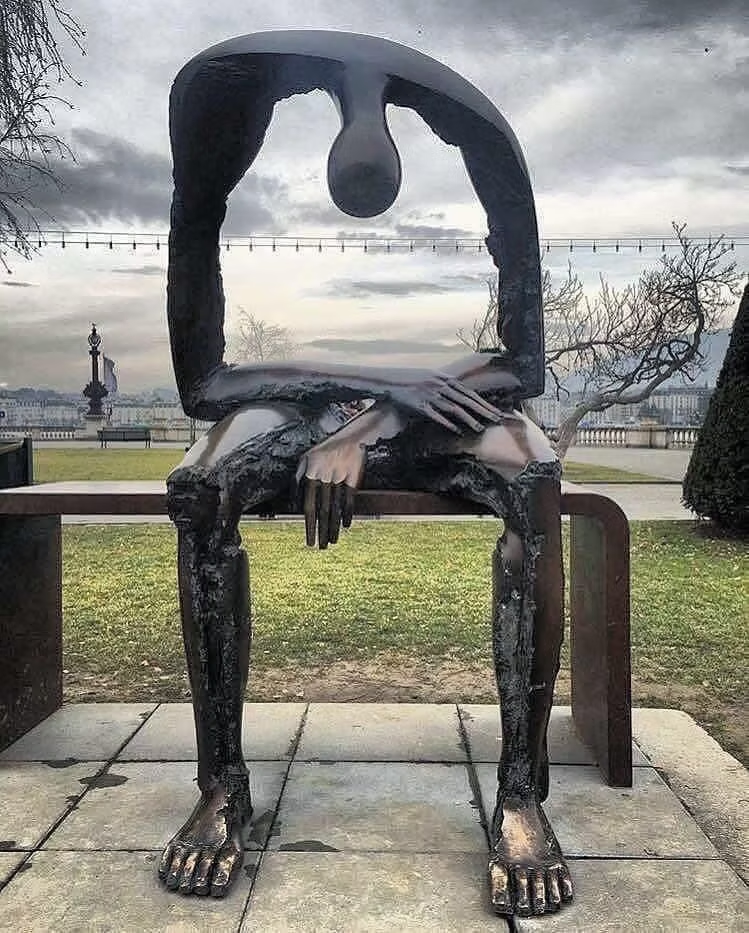
To continue my astronomy metaphor, these secondary losses are black holes in my universe. They are things that I don't necessarily see, but they are there and, subconsciously, they are consuming my thoughts without me realizing it.
Final Thoughts
Just like in space, no two solar systems look exactly alike.
And that’s the most powerful part of this metaphor — recognizing that your universe is your own. You decide who belongs where. You decide what matters, and why.
What truly matters is understanding that with each loss, our inner world expands — not only with sorrow, but also with strength. Every loss changes us. It fuels us in some way.
It’s up to us what we do with that energy.
We can let it consume us.
Or we can let it help us grow stronger, more powerful — to shine even brighter.