Why AI Is the First True Challenge Millennials Have Faced

I hope everyone had a good holiday season and Happy New Year to all – assuming I finish this before 2026 arrives.
It has been a busy month, and I have not written nearly as much as I planned. That's my excuse, and I am sticking to it. The holidays are a procrastinator’s dream. Excuses practically grow on trees like ornaments on a Christmas tree.
But I have a confession. There’s another reason I haven’t published anything lately.
I’ve been writing—but not articles. I’ve been obsessed with writing songs. Yup.
Bear with me.
The Night Everything Changed
I like background noise when I’m browsing on my computer, so I usually put YouTube Music on autoplay. One night, a song grabbed my attention—a gritty, bluesy rock song with a gravelly, bluesy male vocal that I am drawn to.
I looked at the name of the band and I wasn't familiar with it. Strange – I pride myself on being pretty versed, no pun intended, on rock bands. I stopped what I was doing and did a quick google search of the band.
Nothing.
The AI-generated blurb at the top of the search page stated something to the effect that it looks like this band is an AI-generated band created about six months ago and they already have some 200 songs attributed to them.
Are you kidding me? Two hundred songs in six months! That's more than one song a day for the last 180 days.
Heck, I remember it took Guns-N-Roses 14 years to release Chinese Democracy from the time they started working on it in 1994. And that album had 14 songs on it. That averages out to one song per year. I know there were extenuating circumstances, but I would say on average it takes a real band about 6-12 months to produce an album of 10-12 songs.
I had to look into this.
I turned to my buddy “Chad”—my name for ChatGPT—and asked what was going on.
Chad explained that AI-generated music is exploding, and most of us don’t even realize it. I vaguely remembered a headline about some mysterious AI song climbing a Billboard chart, recently, but I thought it was a one-off.
I asked Chad how hard it would be if I wanted to make a song. It told me it would take me less than ten minutes, depending on how involved I wanted to be in the process. It gave me the name of some AI-generating websites. I asked for its recommendation, and it told me that Suno was the most popular site.
The Rabbit Hole Called Suno
I’m not here to promote Suno (but if they want to sponsor me, message me!), but the process is unbelievably simple. There are two main input fields:
- Lyrics: You can paste your own lyrics or ask their AI to write them.
- Style: You describe the genre—rock, blues, R&B, jazz, punk, dance, whatever. You can even specify guitar solos, vocal techniques, crowd noise, or the musical key.
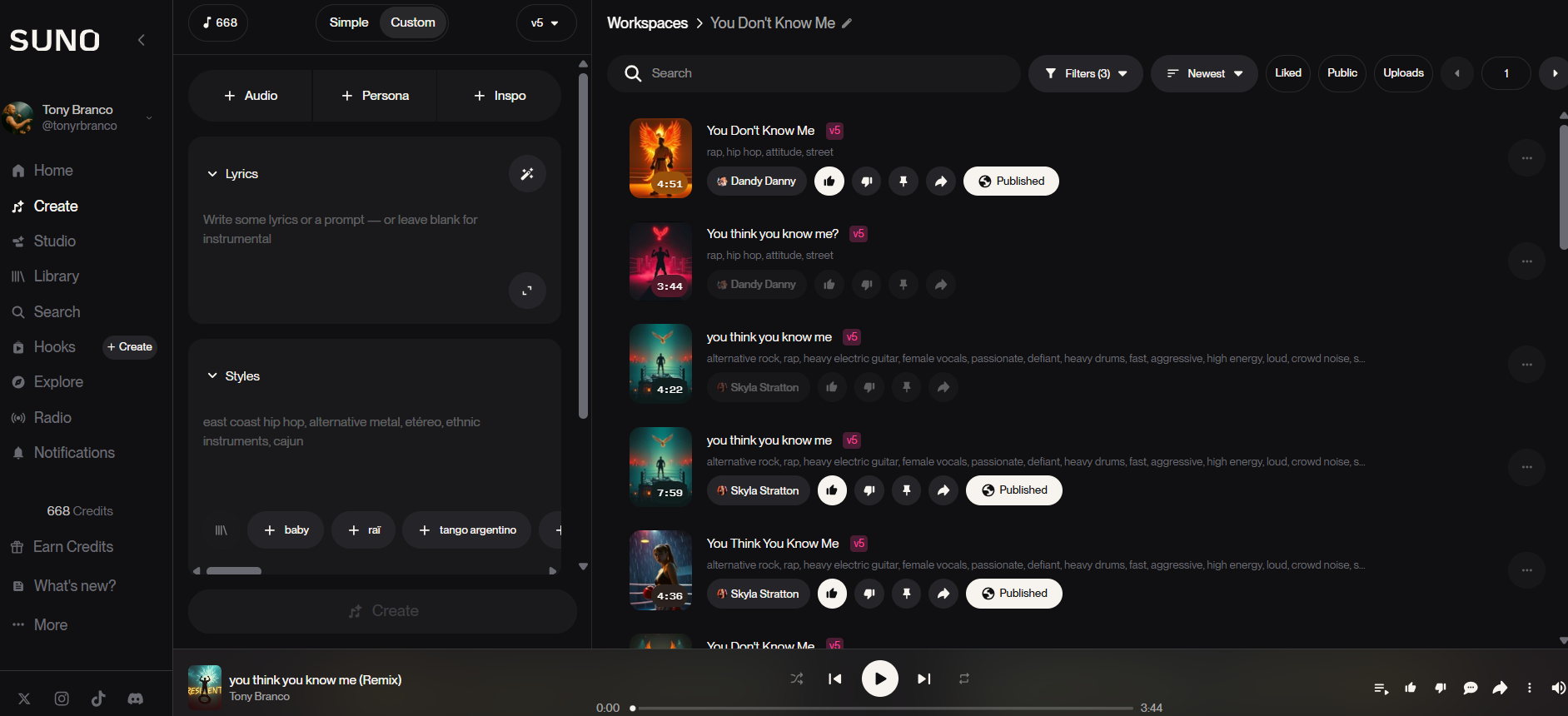
The one thing you can't do is name specific artists or songs. You cannot say “make this sound like Michael Jackson” or “give me a Thriller vibe.”
That's where you get into the ethics and morality of AI-generated music.
I went back to YouTube and did a search of AI-generated music. I cannot tell you how shook I was for the next few hours. The music was incredible—especially the rock instrumentals with electric violins. The visuals were even more mind-blowing.
But what floored me most was the “new” music from dead musicians.
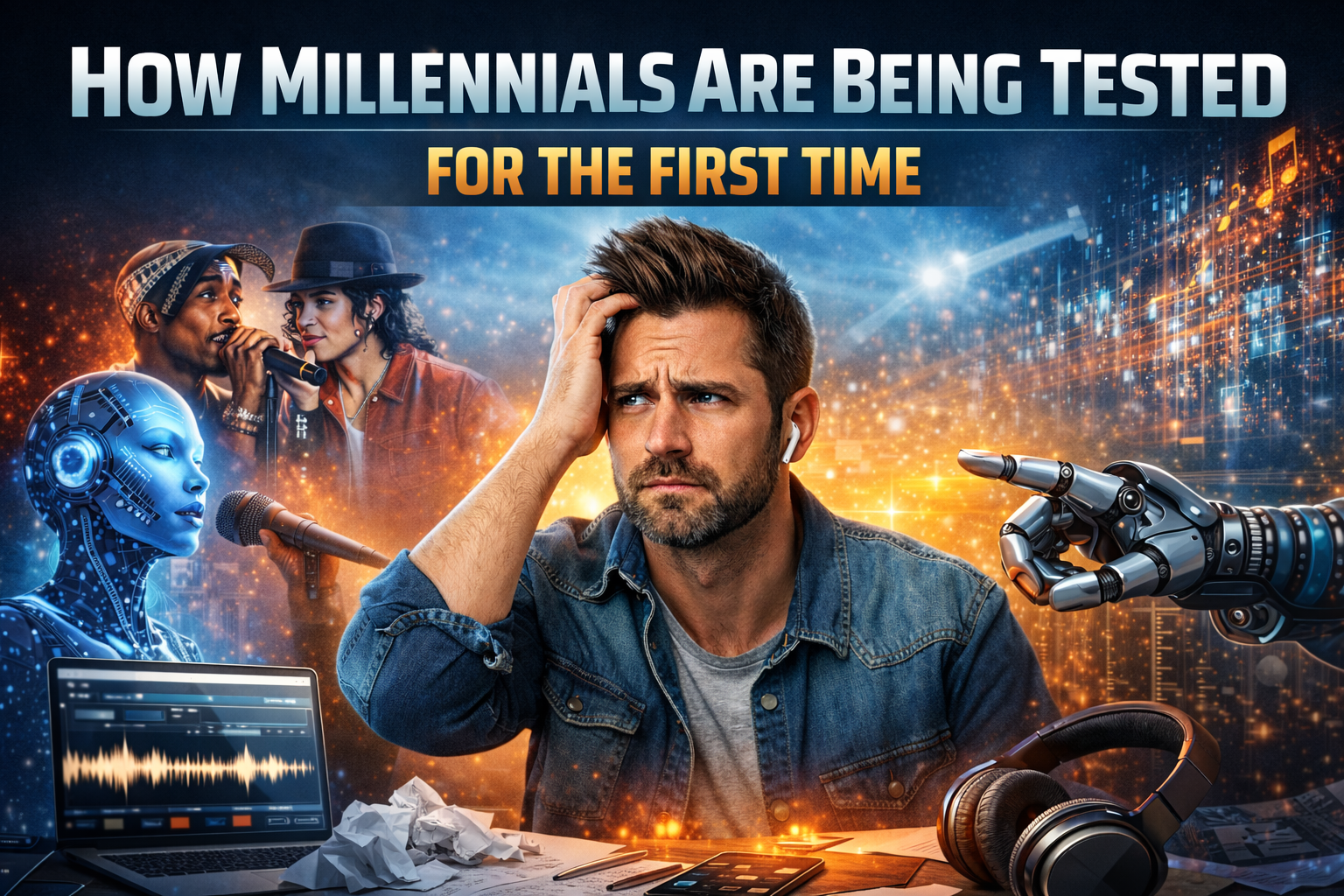
One of the first videos I came across was an AI-generated “collaboration” between Tupac and Michael Jackson—Tupac rapping about current issues, with Michael singing the choruses.
And it looked real.
I think Tupac is one of the greatest poets of my, or any, generation. He had an amazing way with words and the way he applied those words to whatever social issues that were going on at the time were just poignant and apropos.
And now here I was watching him in music videos rapping about current events in 2025, more than thirty years after he died. And he was rapping with Michael Jackson, over 15 years after his death.
As if the visuals of seeing musicians that had been dead for decades wasn't enough, their tone, sound, and lyrics were THEM. If Tupac was alive, what I was listening to him rap is exactly what I would envision him saying. Same for Michael Jackson with his signature voice and style.
This changed my whole world view in a matter of minutes.
Artists could live on forever like this. This was changing my whole concept of death. People in the year 2200 would be able to see and hear Tupac rapping about stuff that may be going on in 2200. The same could apply for Bruce Springsteen, Eddie Vedder, Simon and Garfunkel, Jimi Hendrix... anybody.
Selfishly, I loved it. The music fan in me loved it.
But the empath in me immediately wondered how the families of these artists feel. A few might cherish hearing a loved one’s voice again. But most? I imagine they’re furious at strangers monetizing off their likeness.
As I am writing this, I asked Chad how much AI music creators can make and, not surprisingly, it gave me a wide range. Here was its response's summation:
Bottom Line (Realistic Expectations)
| Creator Level | Monthly Income Range |
|---|---|
| Beginner | $0–$200 |
| Serious Hobbyist | $200–$1,500 |
| Small Professional | $1,500–$7,000 |
| Medium-Scale AI Artist | $7,000–$20,000 |
| Top 1% AI Music Creator | $20,000–$100,000+ |
Most AI music creators who treat it as a business (accounting, volume, SEO, playlists, marketing) can make $1,000–$7,000/month within 6–12 months.
A New Reality—and New Skepticism
Now I question everything I hear online.
Is this a new real band, or is it AI?
I can’t tell anymore. And now that I’ve fed the YouTube algorithm with AI music searches, my autoplay mixes AI artists with “real” performers. And a lot of times I like the AI music better.
Now, I know the topic of AI is VERY polarizing. It has entered the pantheon of politics and religion as things not to discuss at family functions.
My brother-in-law is an artist. My sister-in-law is a journalist. I cannot mention anything about AI-generated anything around them. I completely understand their perspective and why they would hate AI.
I can produce artwork to whatever style I want in five seconds. I could write an article summarizing a baseball game in less than that.
Yes, it will take away from jobs. Sports Illustrated was even caught using AI-generated articles from fake writers back in late 2023.
But as I thought about their hostility, I realized something bigger was happening.
A Generational Plot Twist
Erin’s siblings are Millennials—born in the ’80s. For decades, Millennials have mocked Gen X (me) for being behind on technology. They teased us about learning Netflix slowly. About clinging to CDs. About posting on Facebook. About not understanding Instagram, TikTok, or the latest streaming trend.
By the time Gen X got caught up to Facebook, Millennials mocked us for being stuck in the past.
"Only old people use Facebook," they now say.
I admit to having been behind the technological curve for decades. But now, I feel I am ahead of the curve with my acceptance and knowledge of AI.
For the first time, Millennials are facing a technological advancement they cannot wrap their heads around. AI is to Millennials what streaming was to Gen X.
People my age, and older, had a hard time letting go of cable TV and CDs. I remember when I bought my Pathfinder in 2001, I asked the salesperson, "Where is the CD player?"
Millennials cruised through the tech era they grew up in. They were early adopters of everything—iPhones, social media, binge streaming, podcasts, Uber, GrubHub, Amazon. They embraced all of it and mocked older generations for struggling with it.
Christmas Dinner: Proof in Real Time
This Christmas, I told Erin’s family I made her a song.
"You mean you wrote her a song?" Erin's parents asked me.
"No, I produced a whole song for her," I replied to the parents.
I played the song for them, especially focusing on Erin's brother and sister. They pretended to be mostly disinterested as they perused their social media on their phones. But I could tell they were listening (because my song was damn good!).
When the song was over, they gave a little shoulder shrug and a nod of acknowledgement.
“That was cool," they muttered. Then one of them asked, most assuredly mockingly, "How long did that take? A week? Or did AI do everything?”
I replied, equally passive-aggressively, “Two days. And no—AI didn’t do the whole thing. I wrote the lyrics, arranged most of it. I chose the instruments, tones, vocals. I added every single ‘ooo’ and ‘ahh.' Even every ‘yo, yo, yo.’ That was me.”
I could tell they were flustered.
For the first time in the almost twenty years I've known them, I understood something better than they did.
Do I Feel Guilty? No.
AI will change the world. It will take jobs away from people.
But so did every major technological shift:
- Radio DJs lost jobs due to streaming
- Talk show radio hosts lost jobs due to podcasts.
- Movie theaters lost jobs due to Netflix.
- Taxi companies lost jobs due to Uber.
- Retail jobs were lost due to Amazon.
And just like those new industries, AI is here to stay. So all of us – Gen X and Millennials – need to hold hands and adapt together to this New Reality.
I'm Not Going To Lie – I Am Enjoying This
For the first time, Millennials are the ones that are feeling left behind.
For the first time, they’re looking at a technology that they can't fully grasp.
They are looking at a technology that is moving faster than even anything they've seen in their lifetimes and they feel threatened.
And I’m enjoying every minute of it.
This is the personal love song (lots of New England references and other references you won't understand) thar I wrote for Erin for Christmas which I played for her family. Don't worry - it wasn't the only gift I got her. I got her a card, too. Just kiddin'.
This is, actually, the first song I ever did with Suno. It has to do with missing my mother.