I Lived Through 9/11. I Didn't Need to Watch It Again

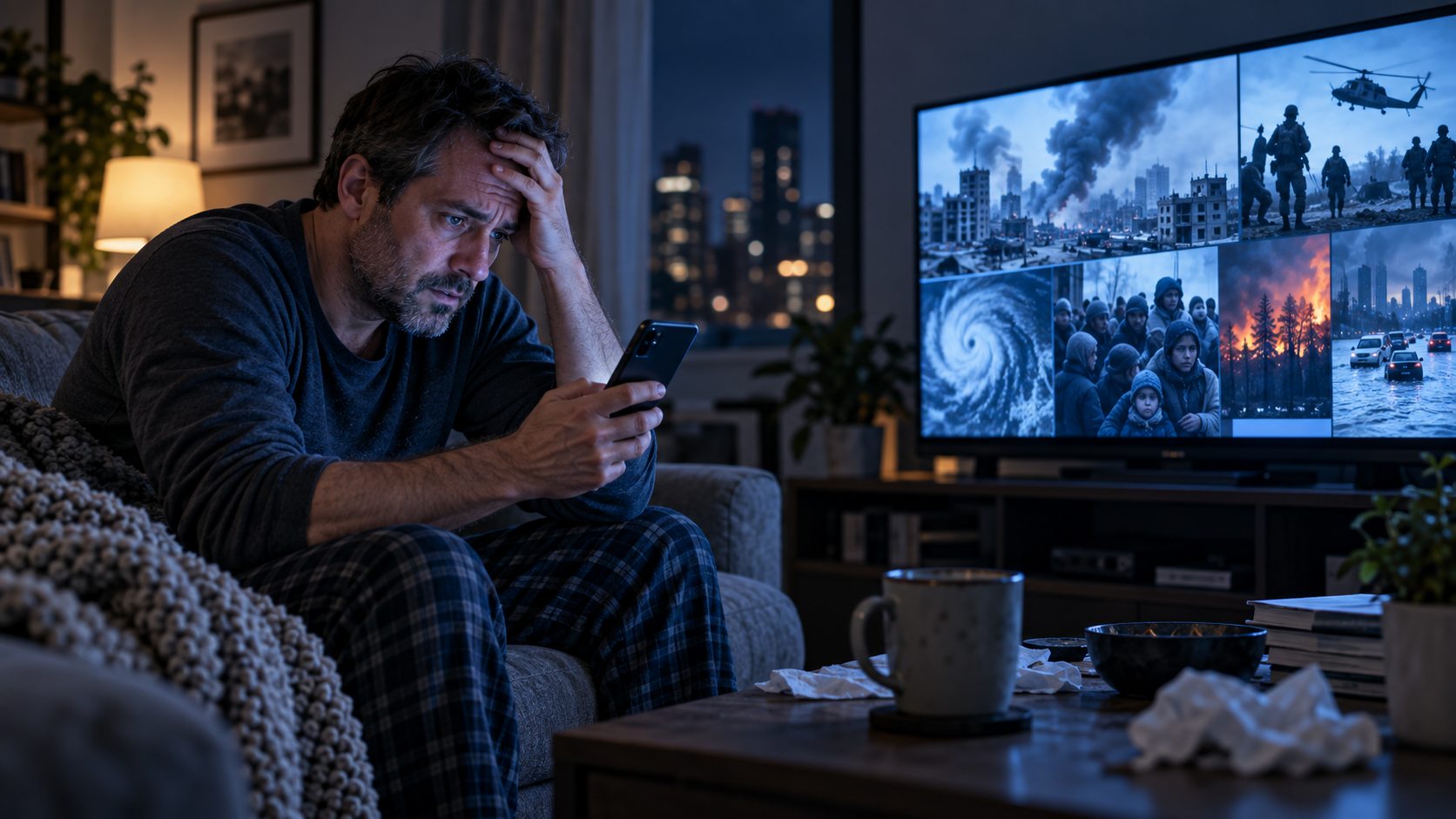
Yesterday was a particularly tough day for me. I wasn't ready for it. Maybe I should have been.
I didn't know any one of the nearly 3,000 people who died on 9/11—or, at least, not to my knowledge. But I remember witnessing the events of that day. Like anyone else who lived through it, that day is etched in my mind.
It's one of those days I had always heard my elders talk about. The day Kennedy was assassinated. Pearl Harbor.
One of those days when you'd never forget where you were when you first heard the news.
I'll spare you my story of where I was. Everyone has one.
Suffice to say, it wasn't very glamorous. I was lying on my belly on the carpet of my basement waiting for my bulky new laptop to sign on to AOL.
Insert dial-up sound here.
I remember I had this new thing called Yahoo! set up as my home page. It was cool because right there I could choose different categories like News, Sports and Entertainment—as many as I wanted and as niche as I wanted—and then choose how many headlines from each category I wanted to see.
This was better than getting my local newspaper delivered. I could get caught up on everything going on in less than a minute.
I might have been thinking, at that precise moment, that maybe they were onto something with this internet thing.
It was when my Yahoo! home page loaded up that I saw the second of my pre-selected limit of three headlines under "U.S. News":
Small plane hits one of the WTC towers.
The rest is history. It wasn't a small plane. And it didn't deserve to be the second headline. Now I'm curious what the first one was.
I guess I lied when I said I'd spare you the story. But I could have gone on!
Fast forward—and I do mean fast forward—to yesterday.
Twenty-five years have now gone by.
There are college graduates who weren't even born in 2001. There are people who have kids of their own and probably work in office buildings near the site of Ground Zero who weren't even born when the towers came down.
THE DAY EVERYTHING CHANGED
As I write this and look back at my own battle with mental health, I wonder if that day changed something inside of me.
I no longer felt safe where I lived.
Before 9/11, I remember wondering what it must be like to live in some war-ravaged part of the world where hearing bombs and explosions was part of everyday life. I imagined it being like sitting through a never-ending thunderstorm, except you didn't know if the next rumble of thunder might kill you.
Those poor people, I thought.
How do they live like that?
But when 9/11 happened, we Americans got a taste of what it is like.
We had been attacked on our own turf, in our most populated city.
We thought we were safe because we didn't see fighter jets, armored tanks or naval fleets coming over the horizon. We had the ability to detect missiles coming our way and—we'd like to believe—intercept and destroy them long before they ever reached the American mainland.
We even had geography and nature defending us. Two enormous oceans served as moats, protecting us from much of the world.
But the face of war changed that day.
Four airplanes were hijacked on September 11. Anyone glued to a television that morning remembers that there were reports of many more.
The enemies had used fully fueled passenger airplanes as missiles.
Never once had I looked at an airliner sitting at an airport and thought, “Hmmm. Someone could use that to take down a skyscraper.”
But the bad guys did.
They intentionally chose long transcontinental flights loaded with enormous amounts of fuel. Then they hijacked them and piloted those planes directly at symbols of American power—buildings filled with people, mostly Americans, but people from all over the world.
Everyone nervously looked toward the sky whenever a low-flying airplane passed overhead. There were reports of car bombs and other attacks. Reporters were nervously relaying almost any rumor they heard. Journalism school be damned.
The American public didn't know what was real and what wasn't.
After what had just happened in New York and Washington, every story seemed possible.
Many of us forget, but in the days that followed came the anthrax letters. Now we were afraid to even open up our own mail. Is that powder I see?
Yeah, something changed inside of me that day. I'm sure it did for many of you, too.
I lost my naivete that day.
I no longer felt safe. It was something I had taken for granted. I hadn't appreciated how lucky I was.
For the first time in my life, I had a small taste of what it must be like for families living in places like Ukraine, Sudan or Gaza—or Iraq during the war years—where the possibility of violence wasn't confined to one horrible day. It was a way of life for them.
For us Americans, that fear lessened as the years have gone by. It is not back to the way things were before 9/11, but it is close—at least until Donald Trump got into office.
Something that has been lost over the years, I believe, is the feeling of patriotism and unity that somehow rose from the ashes of that tragic day.
We weren't Democrats or Republicans.
We were Americans!
We drove around with American flags hanging from our cars.
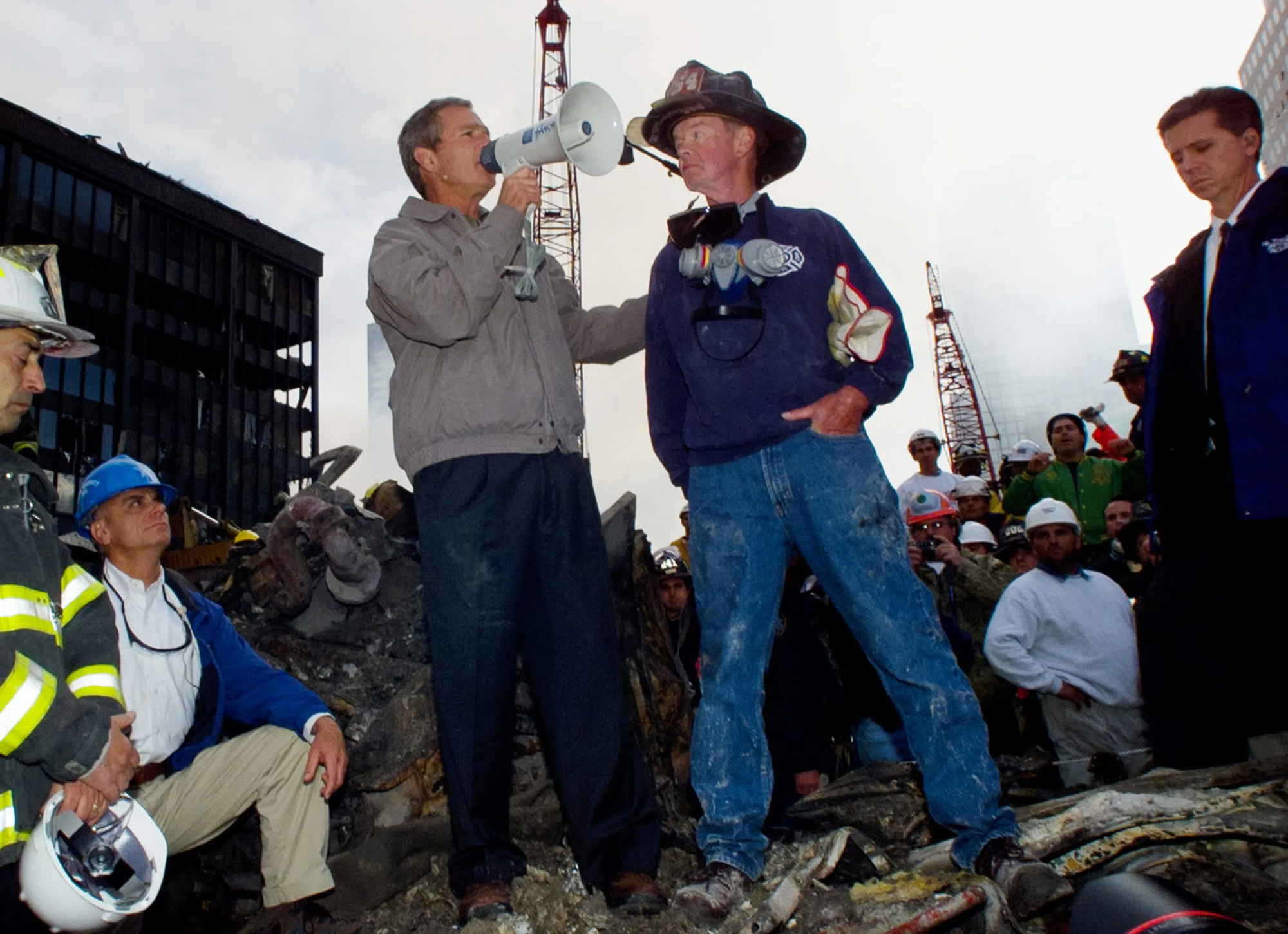
Love him or hate him, we applauded President George W. Bush when he stood among the rubble at Ground Zero, put his arm around a firefighter and spoke into that famous bullhorn.
For a little while, anyway, we were one.
E pluribus unum.
WHEN REMEMBERING BECOMES TOO MUCH
That was a long way of getting to what actually got me thinking about writing this.
The 25th anniversary of 9/11 snuck up on me.
I had a reminder here and there leading up to the anniversary, but when the day actually arrived, I wasn't prepared for the bombardment of images, videos and 911 audio recordings that dominated social media and YouTube.
By two o'clock in the afternoon, I had had enough.
I could feel my mood slipping further and further into the abyss that I have fought so hard to climb out of over these past several years.
Finally, I told myself, "Enough!"
I know, nowadays, seeing violence on television is just normal.
Turn on your evening news—who does that anymore, right?—and take note of the subject matter of the first ten stories. I guarantee you it will go something like this:
Murder. Shooting. Robbery. Corruption. Missing person. Shooting. Scandal.
Maybe they'll throw in a "feel-good" story during the final segment. They know that nobody is watching by then.
Now check out the Top Ten most-watched shows on Netflix at any given time. I can almost guarantee you that four or five of them will be true-crime documentaries.
I hate it when I hear someone say:
"Have you seen that documentary about the Utah murders? It is soooo good."
I'll even catch my partner getting a little too excited and asking:
"Can we finish watching that show about the serial killer?"
I admit it.
I do it sometimes, too.
What we don't stop to think about—and what even I have to remind myself—is that at the center of these documentaries are real people who lost their lives. These people had families.
This isn't some made-up Knives Out scenario. These are real people. We need to remind ourselves of this.
God forbid you were ever murdered. Would you want people a few years later sitting on their couches knowing every gruesome detail about what happened to you and talking about how "good" the show was?
HOW MUCH DO WE REALLY NEED TO SEE?
I think about the famous Zapruder film.
Abraham Zapruder was standing in Dealey Plaza in Dallas, Texas, on November 22, 1963, filming the presidential motorcade as it passed in front of him.
Then three (maybe four) shots rang out. He had just filmed the assassination of President John F. Kennedy.
Life magazine bought the rights to Zapruder's film almost immediately and published selected still photographs from it. But the most graphic image—frame 313—was withheld. It wasn’t until 1975, when a still-rising ABC journalist named Geraldo Rivera aired it on Good Night America, that millions of Americans saw the complete Zapruder film on national television.
Twelve years later.
Think about that for a second.
Today, anybody who knows how to use a remote control or a mouse can find the Zapruder film in a matter of seconds. They can pause it, zoom in, watch it frame by frame and replay it in slow motion—as if they're reviewing a catch-or-no-catch call in a football game.
And they can find much worse violence elsewhere.
Anything, actually.
If there is video of someone being murdered, chances are you can find it somewhere. Sure, maybe YouTube takes down some of it.
But once something is on the internet—even for a few seconds—good luck. That genie is out of the bottle for good. Someone will have taken a screenshot or recorded it.
When Charlie Kirk was killed, close-up footage of the bullet striking his neck circulated almost instantly across social media.
You didn't even have to put in the effort to search for it. It just showed up on people's feeds.
Maybe you were just trying to see what was going on in sports.
Maybe you were checking entertainment news.
Maybe you just wanted to watch some funny reel of a cat running into a glass door because you needed a laugh.
Then...
BAMMM!!!
You get hit with video of Kirk being shot. Instead of silly home videos, you're watching a fellow human's life being ended, instanteously.
You didn't ask to see it. I know some people did.
Maybe a part of me did, too. I'm not proud of that.
Maybe there is something inside all of us that wants to look, even when we know we shouldn't. Maybe I should be more disciplined about not searching it out.
But I definitely don't need it made easy for me.
While we don't actually see the people die when we watch those airplanes slam into the Twin Towers, we know what happened in that instant.
People died. A lot of them.
When we watch those towers collapse into rubble, we know that hundreds and hundreds of lives are ending before our eyes as floor after floor disappears, until the buildings themselves are no more.
Honestly, I still don't know how the death toll wasn't many thousands higher.
But yesterday there were videos popping up in my feeds showing close-ups of people jumping to their deaths from the buildings.
One clip was filmed from inside one of the towers and showed firefighters reacting every time they heard a loud thud.
Every thud was a person's life coming to an end.
By early afternoon, I told myself I'd had enough.
No more going on my phone. No more scrolling through my recommended videos on YouTube. Everywhere I looked there was another graphic reminder of that day.
I lived it.
I didn't need to see it again and again. Leave that stuff for the younger generations to watch, read about and learn from.
I didn't need to relive it.
So I retreated outside for a little while.
I TURNED OFF MY ELECTRONICS, BUT MY BRAIN DIDN'T.
The damage had already been done. There was no escaping it.
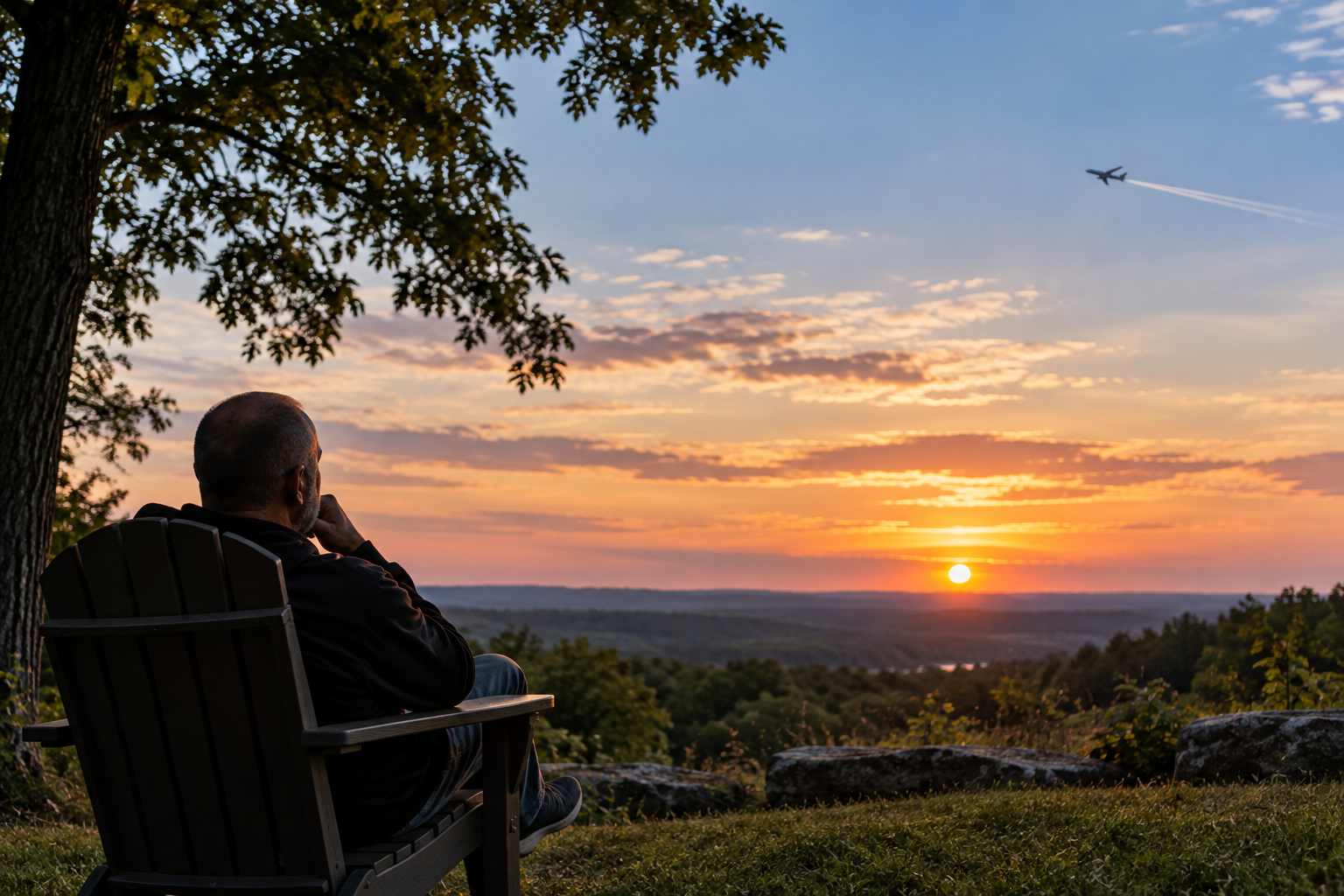
Shortly after setting up my chair in the shade underneath a tree, I heard the siren of a firetruck. Immediately, memories of the police, ambulance and firetruck sirens from 25 years earlier came flooding back.
Then I heard the faint hum of a commuter plane somewhere in the distance.
I looked up.
I watched that tiny black cross slowly make its way across the sky.
Immediately, my mind went to United Flight 93.
There were many heroes on September 11.
But the passengers and crew aboard that airplane sit near the very top of my list—not only among the heroes of that day, but among the great acts of courage in American history.
The two World Trade Center towers had already been hit.
So had the Pentagon.
Flight 93 was believed to be headed toward the U.S. Capitol in Washington.
It was only about 18 minutes of flying time away from their intended target.
By then, the passengers had learned through phone calls what had happened in New York and Washington. They understood what their hijackers were likely planning. There wasn't going to be a negotiation. This wasn't about money. These men intended to use the airplane as a weapon.
And they knew that if they did nothing, more people were going to die. Members of Congress. Their staff members. Unsuspecting tourists.
Maybe even the seat of American democracy itself was at risk.
So they made a decision. They weren't going to sit and watch this happen. They were going to fight back.
Todd Beamer was heard asking the others around him if they were ready.
Then came two words that would become forever linked to that flight:
“Let’s roll.”
Passengers and crew members—including Beamer, Tom Burnett, Jeremy Glick and Mark Bingham—rushed to the front of the plane and tried to break into the cockpit, prompting the hijackers to deliberately crash the plane into a field near Shanksville, Pennsylvania.
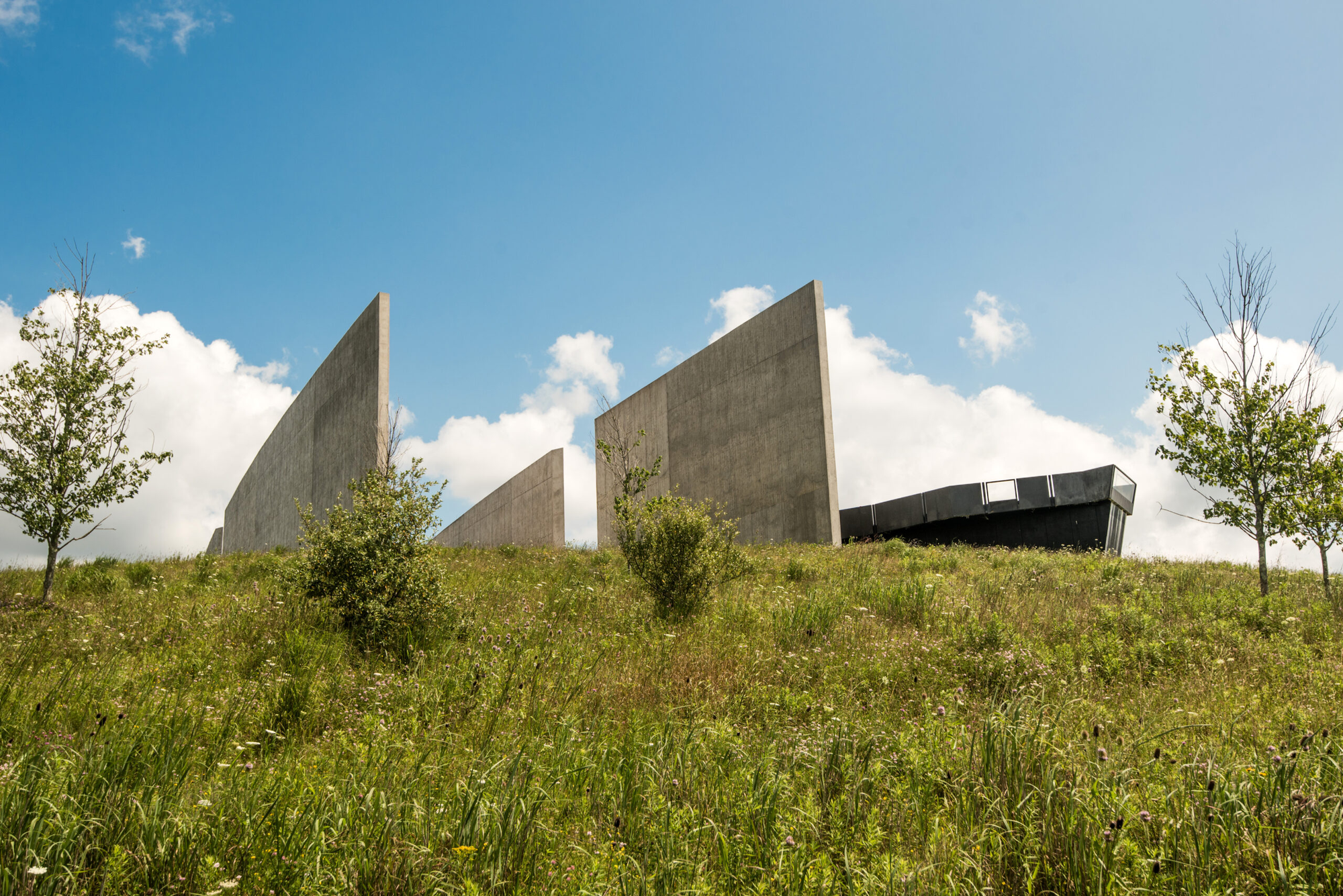
Everyone aboard died. They made the ultimate sacrifice.
We'd like to think we would have done the same thing if we were in that situation.
But would we?
Hopefully, none of us will ever be put in a position where we have to find out.
What we do know is that whatever was supposed to happen at the Capitol never happened.
As I watched that commuter plane disappear into the distance yesterday, I also thought about how eerie the sky had been in the days immediately following September 11.
For the first time in American history, the FAA shut down civilian aviation across the country.
The airplanes already in the sky were ordered to land.
For roughly two days, the skies were completely clear. No airplanes in sight.
I remember being outside and just staring up at the sky in amazement, sometimes for minutes at a time. It must have been what the sky looked like before the Wright brothers first flew their plane in 1903.
So here I now was, twenty-five years later, hearing a firetruck and connecting it to Ground Zero.
And here I was watching an airplane flying overhead and thinking about Flight 93.
Those were two pretty obvious examples of what hours of consuming images and sounds from September 11 had done to the way I experienced the world around me that afternoon.
And that's what got me thinking...
WHAT IS ALL OF THIS DOING TO US?
If a few hours of negative imagery could change the way I experienced something as ordinary as a firetruck siren or an airplane passing overhead, what is the constant consumption of violence, murder, war, shootings and human suffering doing to us over years?
What is it doing to the way we see other people?
What is it doing to the way we see the world?
And what has it done to the way our minds work?
I don't know the answer. But I suspect it isn't good.
Yesterday reminded me that sometimes the healthiest thing you can do is turn off technology.
We can't turn off our memories. But we don't have to keep feeding them. We certainly don't need to hear or see things that jar those memories loose again and again.
It is okay to remember.
We can honor those who died.
We can make sure future generations understand what happened.
But we also have to look out for ourselves. We have to protect our own mental health.
We have to keep looking forward.
And somehow, we have to keep trudging ahead.